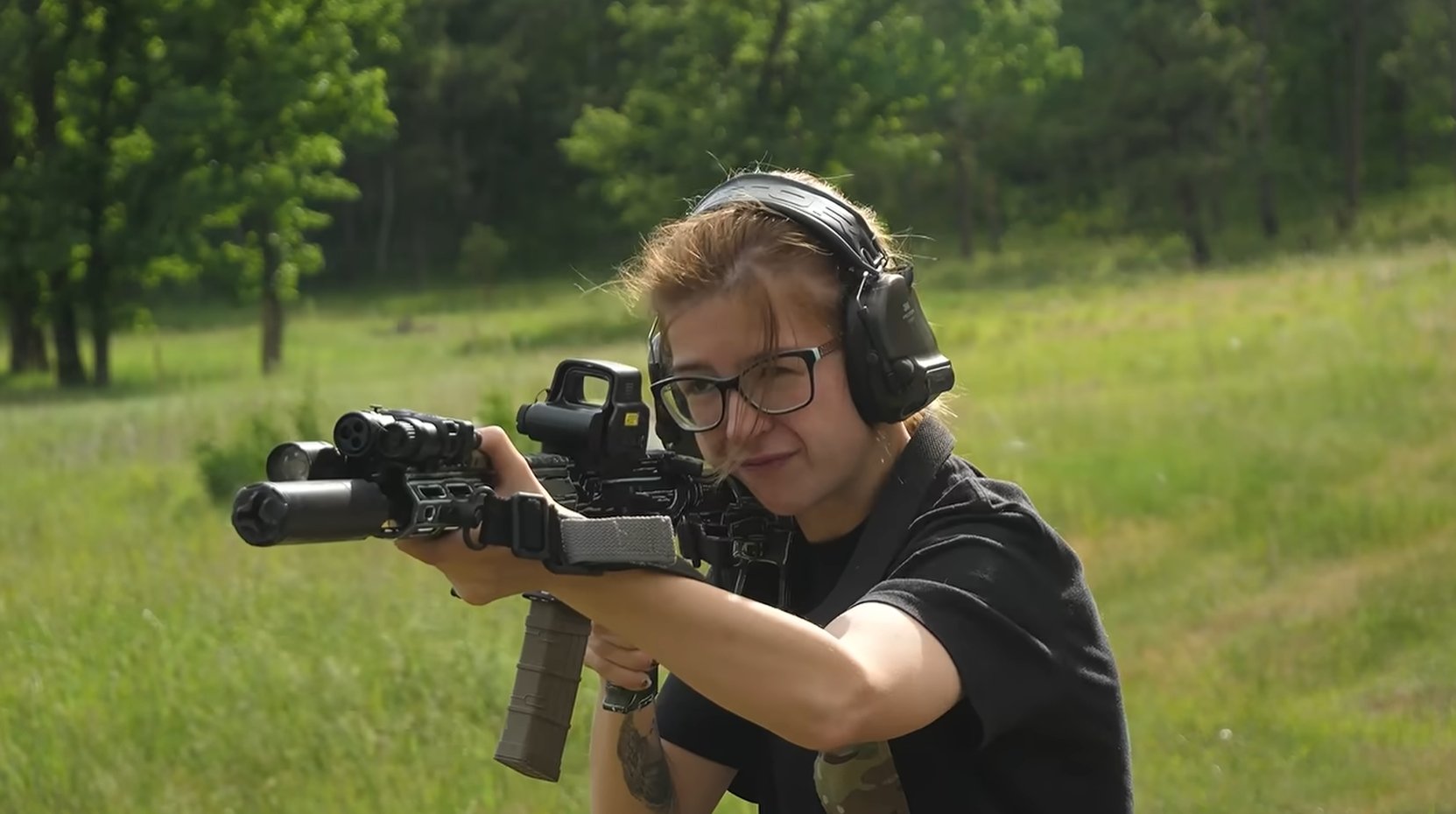
 Loads from YouTube only after you press play
SBR 5.56 ammo selection: why the FBI's weight-retention standard falls short
Key points: SBR 5 56 ammo
- The video is a direct response to a TFB interview with the FBI on SBR barrel length and ammunition; she accepts 11.5 inches as a sound barrel choice but argues the ammo advice only makes sense given a law-enforcement mission that rarely engages past 50 yards.
- Her central criticism is the grading protocol itself — penetration depth, expansion diameter and retained weight are the priorities, and weight retention in particular biases selection toward heavier, slower projectiles that shed less material during expansion.
- She argues fragmentation is set aside because it is hard to score rather than because it underperforms, and that a load penetrating 15 inches while leaving two small fragments near the 14-inch mark gets marked down on retained weight despite the terminal effect.
- The energy figures she reads out: 50 to 55 grain at roughly 2,700–2,900 fps yields about 970–1,030 ft-lbs, a 62-grain near 2,650 fps drops to roughly 750–760, and 70 to 77 grain at 2,400–2,500 fps climbs back into the 900s — which is why no single weight wins outright.
- Barnes TSX in 50 and 55 grain is her counterexample to the heavy-bullet assumption, a lightweight projectile she says retains weight at high velocity and still expands at low ones, and a Sierra bullet marketed as expanding is her example of a design that turns into an effective fragmenting round outside its expansion window.
- She calls the commonly quoted 2,500 fps fragmentation threshold outdated, saying current projectiles fragment reliably down to about 2,000 fps and some closer to 1,900, with softer materials chosen for short-barrel velocities driving the change.
- Her recommendation is a weight class rather than a product — something in the 60-grain region as the one-size-fits-all across barrel lengths — with TAC-TX, TSX, bonded defense loads, InterLock and Fusion named as sound options; no rounds are tested on camera here.
About this Ballistics Focu video
SBR 5.56 ammo selection, argued against the FBI protocol: Boondock Ballistician responds to the TFB interview that named 64- and 75-grain as the only good weights for an 11.5-inch barrel, and argues the shortlist follows from how the bureau grades — penetration depth, expansion diameter and retained weight, scored for engagements rarely past 50 yards. She walks the muzzle-energy numbers across 55, 62 and 77 grain, defends fragmentation as a wounding mechanism modern bullets deliver below the old 2,500 fps threshold, and lands on the 60-grain region as the general-purpose answer.
Transcript: SBR 5 56
Read the excerpt
I get asked this question a lot, and it's a little bit more nuanced of an answer, so I've kind of avoided doing a video on it. Though, I certainly answered a few people in DMs with some opinions. But, recently the FBI did an interview with TFB about the best barrel length for your 5.56 for an SBR. And, of course, in that video they talked about effective ammo to go along with it and the whys, which meant I started getting this question even more than normal. […]
Full transcript on file — indexed for site search.