 Loads from YouTube only after you press play
Supreme Court 9-0 in Case v. Montana: the warrantless home entry standard
Key points: Supreme Court 9-0 Case
- The holding is a reaffirmation, not a new rule: officers may enter a home without a warrant or probable cause when they have an objectively reasonable basis to believe an occupant is seriously injured or imminently threatened with such injury — the standard from Brigham City v. Stuart.
- Both sides lost their preferred test. Montana and the federal government asked for a sliding-scale reasonable suspicion standard, which the Court called too weak to protect the home; Case asked for probable cause, which the Court tied to criminal investigation rather than life-saving entry.
- The judgment below survived but its reasoning did not — the Court affirmed the outcome of a 4-3 Montana Supreme Court decision while throwing out the looser framework that court used to reach it, closing off an expansion of community caretaking after Caniglia v. Strom.
- Applied to these facts, the Court found the entry reasonable because officers had a report that a weapon might be involved, saw an empty holster through a window, and got no response from a man they believed might harm himself — so the evidence found inside, including a gun in a laundry basket, stays in.
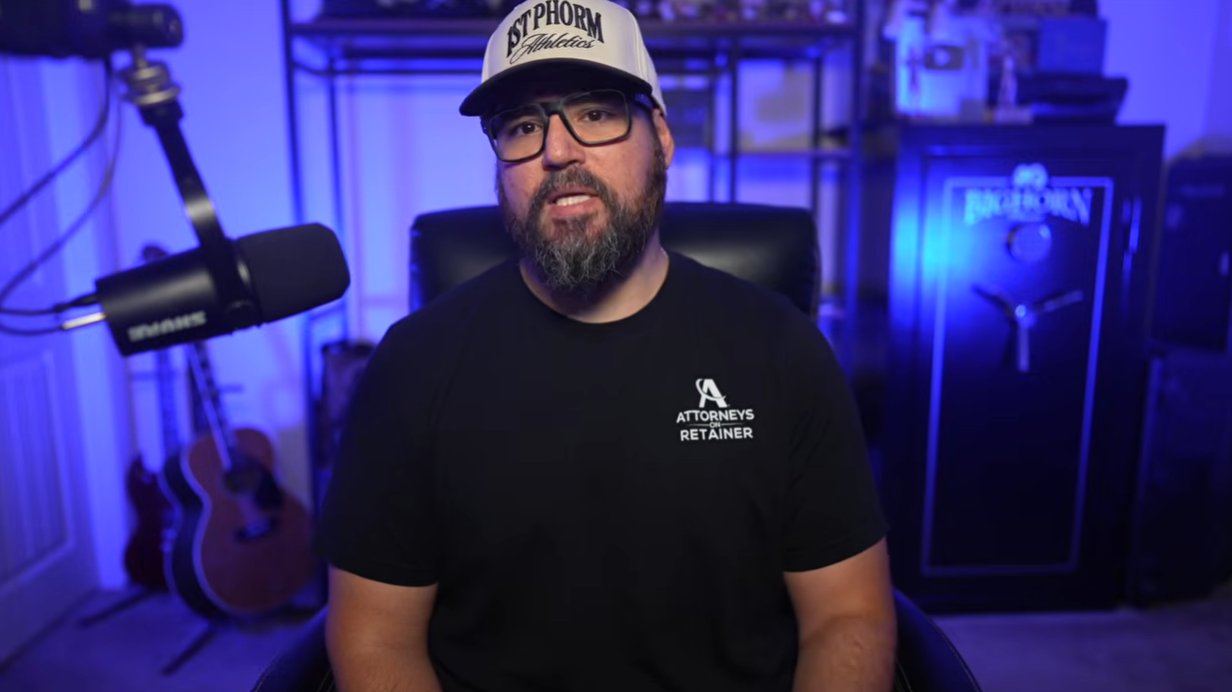
- The host's warning is about application rather than the holding: objectively reasonable is judged case by case, so a credible-sounding call plus what officers can see from outside may be enough to put them through an unlocked door, and pending suppression cases nationwide now run through this test.
- Read it as advocacy-flavored legal commentary, not neutral reporting — the framing leans hard on hidden traps and warnings, the 40 minutes officers spent outside is presented as evidence against the emergency claim, and the video quotes only one line of the opinion.
About this Drama and Gripe video
Case v. Montana: the Supreme Court ruled 9-0 that police may enter a home without a warrant when they have an objectively reasonable basis to believe an occupant is seriously injured or facing imminent harm. Armed Scholar walks the facts — a vague 911 call, four officers waiting outside for 40 minutes, an empty holster seen through a window, an unlocked door, and an officer firing at a moving closet curtain — then the holding: reasonable suspicion rejected as too weak, probable cause rejected as too strict, and the Brigham City v. Stuart emergency aid test reaffirmed for the whole country.
Transcript: Supreme Court 9-0
Read the excerpt
The United States Supreme Court has handed down a massive unanimous 9 to zero ruling that fundamentally changes when law enforcement can march right through your front door without a warrant. If you think that your home is completely protected, you need to watch out because the Supreme Court delivered a massive warning for property owners nationwide. In a critical lawsuit, the Supreme Court was […]
Full transcript on file — indexed for site search.