 Loads from YouTube only after you press play
USPSA competition shooting: calling shots, transitions and stage planning
Key points: USPSA competition shooting calling
- Calling shots means taking a mental snapshot of where the sights sat on every trigger press, then deciding immediately whether the hit needs a make-up — Willie dropped two misses at the match because he did not follow up.
- USPSA scoring is not built around hitting alphas every time: the decision is how fast you can run while dumping alphas and charlies, and he will make up a delta or a miss but never a charlie.
- His high shots on the demo came from post-ignition push — not letting the sights settle — and the fix is forcing the gun level and resetting the trigger so the second shot is already lined up.
- Target transitions are about cadence: as the second shot breaks the eyes are already on the next target, and done right, three targets shot twice should sound identical to one target shot six times.
- He drills it on a USPSA standard — three targets, two rounds each, speed reload, two more each — starting at half-second splits, because efficiency builds speed rather than the other way round.
- Stage planning is the biggest points swing: you get three to five minutes to walk it, pick a direction and plan footwork, and the fastest shooter in his squad won a stage by deliberately taking a no-shoot penalty instead of ducking under it.
- Both push shooting your own pace — squadding behind an A-class or master shooter will drag you out of it — and say dry fire with a timer is what desensitizes you to the buzzer.
About this Tactics and Training video
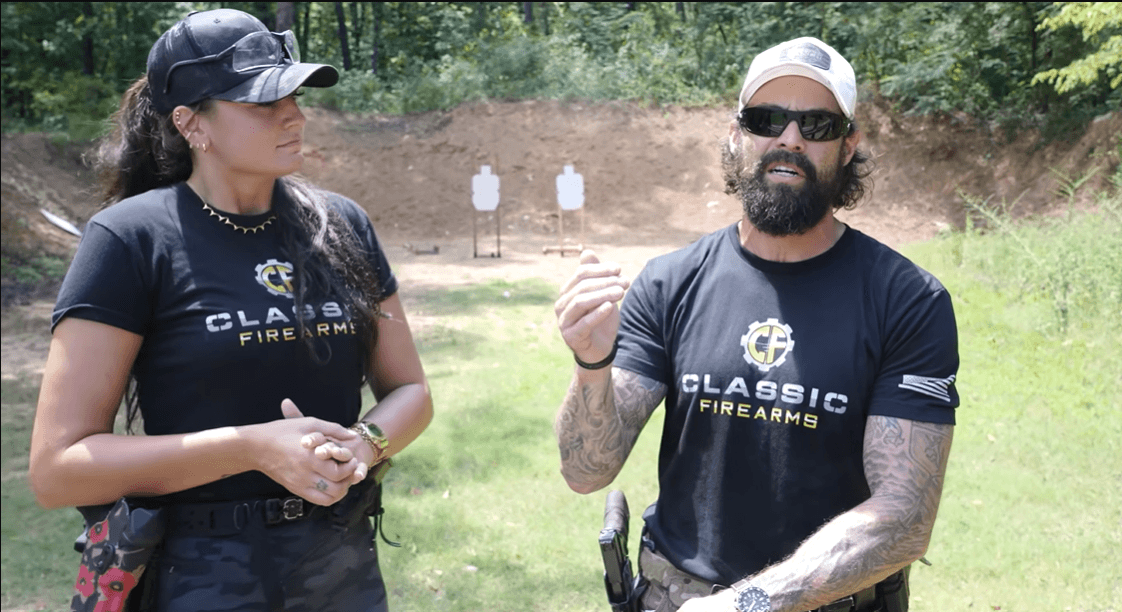
USPSA competition shooting for first-timers: Classic Firearms host Eliza and instructor Willie — a former Marine who went on to SEAL Team 2 and now teaches with GBRS Group — come back from a match in Utah with the three things they wish they had known: calling shots, target transitions and shot cadence, and stage planning. Each one gets demonstrated on the range with a shot timer. Gear gets a walkthrough first: a stock Glock with irons, a Glock 49 with a Vortex dot and X300, Wilder Tactical belts, G-Code and Safariland holsters.
Transcript: USPSA competition shooting
Read the excerpt
[music] Welcome back to Classic Firearms everybody. I'm Eliza and today we have a special guest. This is Willie. Willie, will you go ahead and tell the people who you are? >> I will. My name's Willie. I started my career in 2004 with the Marine Corps. Uh did a deployment with them and came back, transferred to the Navy, went to Buttsclass 265. Um then got orders to SEAL Team 2. I did a few platoon […]
Full transcript on file — indexed for site search.