 Loads from YouTube only after you press play
Nuclear strike survival: the first 72 hours after a detonation
Key points: Nuclear strike survival first
- The opening sequence is a high-altitude EMP seen as a bright flash: large electronics, internet, satellites and GPS go down, while cell phones and Geiger counters are expected to survive and cars are described as hit or miss.
- The first check on people is a blood sweep, not a radiation check, on the reasoning that a massive bleed from blast debris kills long before radiation does.
- The first seven hours are treated as the most dangerous window, because surface detonations loft irradiated debris that comes down as early gamma-emitting fallout wherever the wind carries it.
- The anti-contamination suit is presented honestly: it stops nothing of gamma radiation, and exists only to keep fallout dust out of eyes, nose, mouth and open wounds — shed it slowly, bury it away from the group, then wash rather than scrub.
- Secondary effects get equal billing with the blast: flash blindness from looking toward the fireball kills the two missing hikers in the scenario, and is tied to real-world car crashes and falls.
- Water rules are specific — sealed stored containers, a pumped deep well or a piped spring are usable, while open creeks and open wells collect fallout and are ruled out for about the first week.
- The shelter plan is 48 to 72 hours in a basement with as much earth and concrete overhead as possible, sealed food wiped down with wet disposable towels, periodic Geiger checks at windows and exits, and the 7/10 rule as the guide to falling radiation.
About this Tactics and Training video
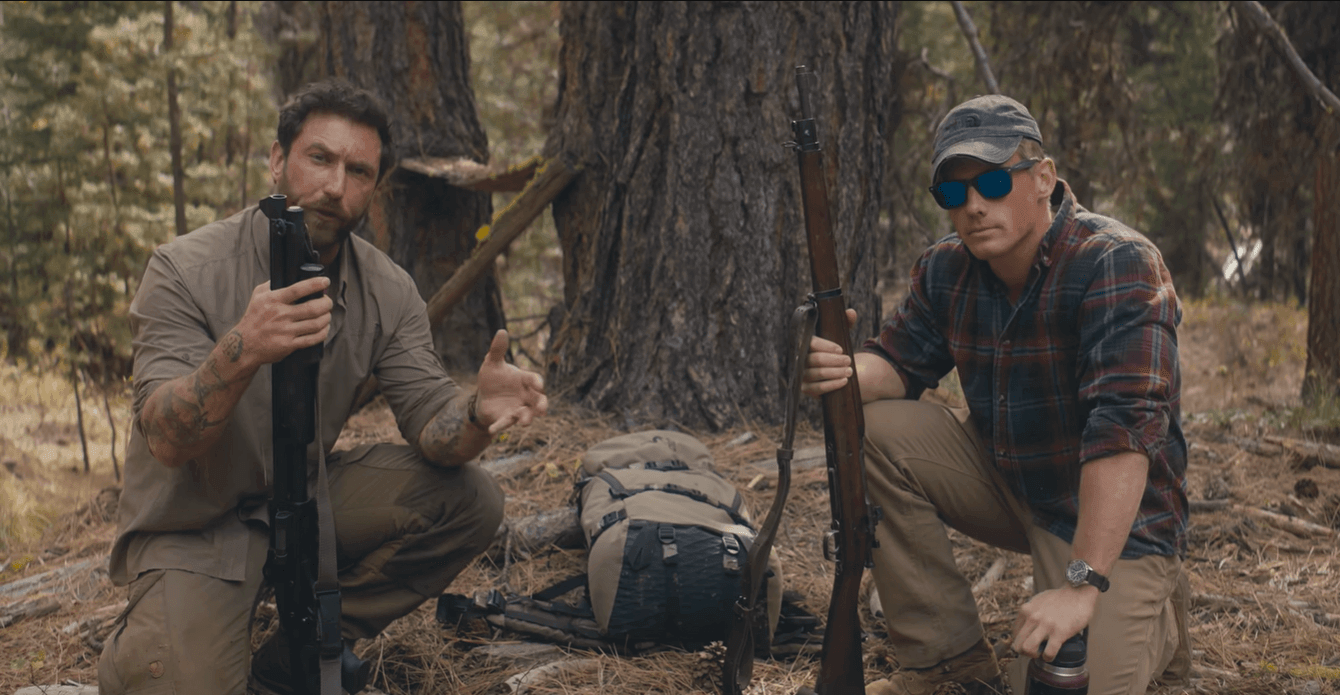
Nuclear strike survival walked through as a full scenario: Garand Thumb and two military veterans play out the first 72 hours after tactical nuclear detonations hit military bases about 40 miles away. It covers the high-altitude EMP that takes down comms and GPS, the blood sweep that comes before any radiation worry, an improvised anti-contamination layer and the slow way to shed it, Geiger counter readings used to pick a route home, and a basement shelter-in-place stretch on sealed water and canned food.
Transcript: Nuclear strike survival
Read the excerpt
Today on Grandthumb, we're going to be looking at a possible nuclear strike. This is going to be started with a high-altitude electromagnetic pulse. This will have a range of hundreds to over [music] a thousand miles. It's going to disable those larger electronics, cell phones, etc. are going to be fine. Cars can be a little bit hit or miss, so make sure that you check them. The EMP will look […]
Full transcript on file — indexed for site search.